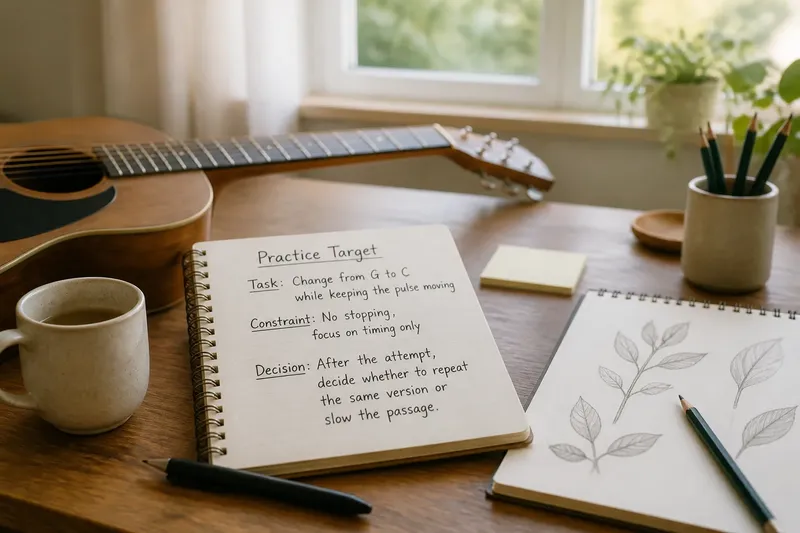
The Repetition Trap: More Runs Do Not Always Mean More Learning
The repetition trap turns practice into autopilot. Learn how to spot stale repetitions, use a worked example and choose a better way to continue.
The most common repetition trap is treating another run as the answer to a disappointing one. In speech practice, drawing, music or sport, that can make an unhelpful routine more familiar while costing you attention and time. Repetition is useful when it serves a purpose; it is not automatically useful just because it continues.
Instead of adding another identical attempt, decide whether the task needs easier conditions, a different kind of practice or a pause. The aim is to make a deliberate choice about how to continue, not to inspect every performance for flaws.
The repetition trap starts when practice becomes automatic
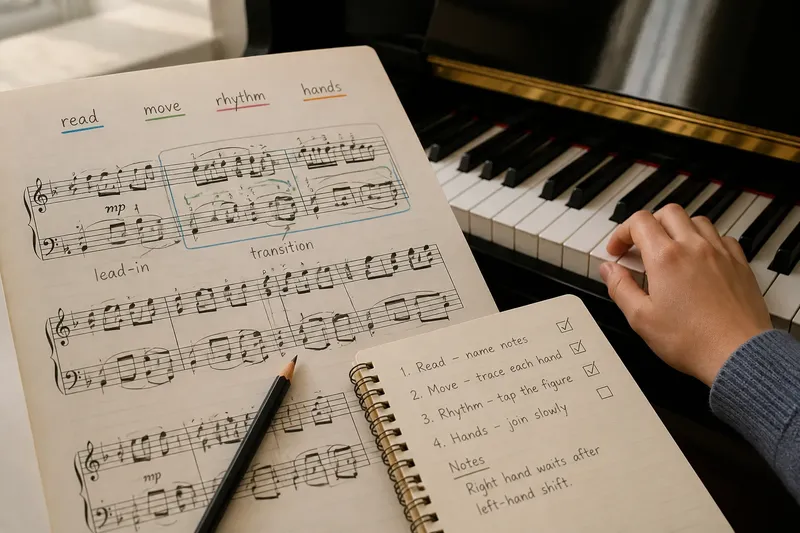
Repeating a whole task can feel productive because the activity is familiar. But familiarity can hide the point that needs attention. A speaker may keep rushing the same sentence; a pianist may replay an entire passage while stumbling at the same transition.
Look for signs that another full run is not serving its purpose:
- If you start before deciding what this attempt is for, then pause and choose a purpose; otherwise, continue with the planned task.
- If the same section repeatedly causes difficulty, then practise that section separately; otherwise, keep working through the larger task.
- If you are repeating only to erase frustration, then take a short break or switch to a simpler activity; otherwise, continue if you can stay attentive.
- If the task feels easy but does not transfer to a new setting, then vary the setting or material; otherwise, keep the current conditions steady.
- If you cannot tell what happened during a run, then shorten the section or use a recording you can review; otherwise, rely on your direct observation.
- If fatigue is making the movement or performance less controlled, then stop or rest; otherwise, continue only while you can practise with care.
These checks are not a demand to analyse every attempt. They are a way to notice when repetition has stopped matching your needs.
Choose a practice format that fits the difficulty
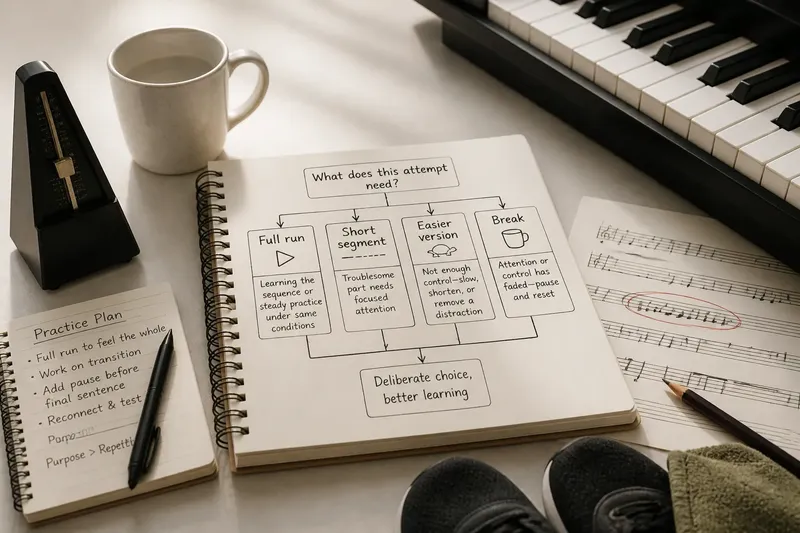
Different difficulties call for different formats. A complete run helps you experience the whole task. A short segment makes a troublesome part easier to approach. Slower practice can give you room to coordinate a movement or phrase. Changing the context can show whether a skill holds up beyond familiar conditions.
Keep the format tied to the difficulty. If a presentation falters at one transition, rehearse the transition with the sentence before and after it. If a sketch loses its shape near a curve, work on that curve before returning to the full drawing. Avoid changing several conditions at once unless you intend to explore how they interact.
When the difficulty is unclear, choose a smaller section rather than repeating the whole task more forcefully.
Use a worked decision to break the loop
Say you are practising a short spoken explanation. In this invented situation, your starting point is a three-sentence explanation whose final sentence keeps sounding hurried. You have been repeating all three sentences, but the ending still feels rushed.
First, keep the wording and speaking position unchanged so the practice stays comparable. Next, work only on the final sentence, leaving a brief pause before it. After each attempt, listen for whether the pause is present and whether the sentence still speeds up. If the pause appears but the pace remains hurried, try dividing the sentence into two phrases; if the pause itself disappears, return to the shorter section and practise entering it calmly. Once the ending sounds controlled in isolation, reconnect it to the full explanation. The tradeoff is clear: segment work gives the difficult moment more attention, while a complete run shows whether it fits the whole delivery.
When should you repeat, change or stop?
When should I repeat the same version?
Repeat it when you are learning the sequence or need another attempt under steady conditions. If the same snag persists without giving you useful information, switch to a shorter section or a different practice format.
When should I make the task easier?
Reduce complexity when you cannot perform the part with enough control to notice what is happening. Slow the pace, shorten the passage or remove a distracting condition, then restore difficulty gradually as the task becomes manageable.
When should I ask someone for feedback?
Ask a teacher, coach or trusted peer when you cannot identify the source of a recurring difficulty or when outside perspective would help. Request comments on one specific part rather than a judgement of the whole performance.
When is it better to stop for the day?
Stop when attention or control has faded enough that further attempts are unlikely to be careful. If you feel pain or have a safety concern, stop and seek appropriate qualified advice rather than pushing through.
Make repetition serve the task
The repetition trap is avoided not by analysing every run, but by choosing a practice format that fits the difficulty. Use a full attempt for the whole task, a short segment for a snag, and changed conditions when you need to see whether a skill carries over.
For the next practice session, decide whether you need a complete run, focused segment, easier version or break. That choice makes the repetition trap easier to spot and gives each return to the task a clear reason.