Practice in Short Blocks or One Longer Session?
Choose short or long practice sessions by matching attention, setup costs and task demands, then build a schedule you can follow without wasting effort.

The common mistake with practice sessions is choosing a duration by habit: a short slot feels too small, or a long one seems more serious. That can cost you useful attention or leave you spending more time setting up than practising. The better choice depends on the task, how long it takes to get ready, and what your attention is doing. To choose between short practice blocks and one longer session, start by looking at the work itself.
Decide what the task asks of you
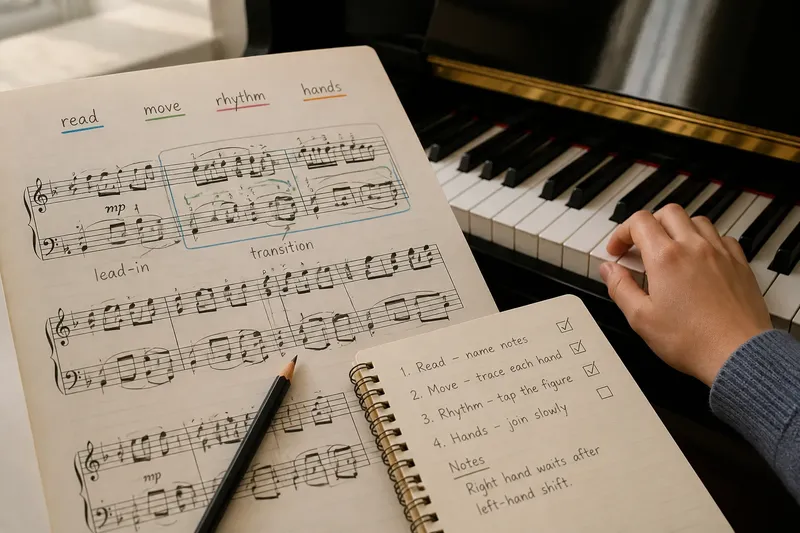
Write down the specific activity you intend to practise, not the broader skill. “Work on piano” could mean reading a difficult passage, keeping a steady rhythm, or learning where your fingers move. “Practise drawing” might mean making clean ellipses, mixing a particular colour, or studying a reference. Different activities can suit different session lengths.
Short blocks often suit tasks with a clear, repeatable unit: a few lines of language, a knot to tie, a small section of a piece, or a set of sketching marks. You can return to that unit after a break and notice whether the next attempt feels more controlled. The work is easier to begin because you can see where it starts and stops.
A longer session may suit work that needs an extended run before it becomes meaningful. Playing a full piece, practising a complete presentation, or building a design from a blank page may involve transitions that are awkward to interrupt. A single uninterrupted period lets you move through those stages without repeatedly restarting.
Do not assume that a task belongs permanently to one format. A musician might practise a troublesome phrase in short blocks, then play the full piece in a longer session. The format can change with the activity.
Count the cost of setting up
Before choosing a schedule, list what must happen before the first useful attempt. You may need to clear a table, open a particular file, tune an instrument, gather tools, find a quiet room, or wait for a partner. Setup is not wasted if it enables good practice, but repeating it can make very brief sessions cumbersome.
For a task with almost no setup, a short block may be easy to fit into a natural pause. If you need to carry materials to a workshop or arrange a practice space, you may prefer to stay with the task once everything is ready. There is no need to keep extending the session simply to justify the preparation; instead, consider whether several related activities can share one setup.
Keep a small “ready to begin” arrangement where it makes sense. A notebook and pencil on the desk, a saved practice file, or a prepared folder of reference images can reduce the steps between deciding to practise and starting. For equipment or activities where safety matters, follow the relevant instructions and use appropriate qualified help when needed.
Make the first useful attempt easy to reach. Put the materials you need together before the next session.
Check how attention behaves during the work
Attention is not the same as willingness. You may want to continue but notice that you are repeating the movement without watching it, overlooking errors, or losing track of what you meant to focus on. Those are practical signs to pause, change the task, or finish for now.
In a short block, choose one thing to watch. While practising a spoken passage, for instance, you could listen for whether a phrase is clear rather than trying to monitor every sound at once. In a longer session, give the work internal changes of pace: move from a focused exercise to a full run, or from making a draft to reviewing it. A longer session need not mean doing the same thing continuously.
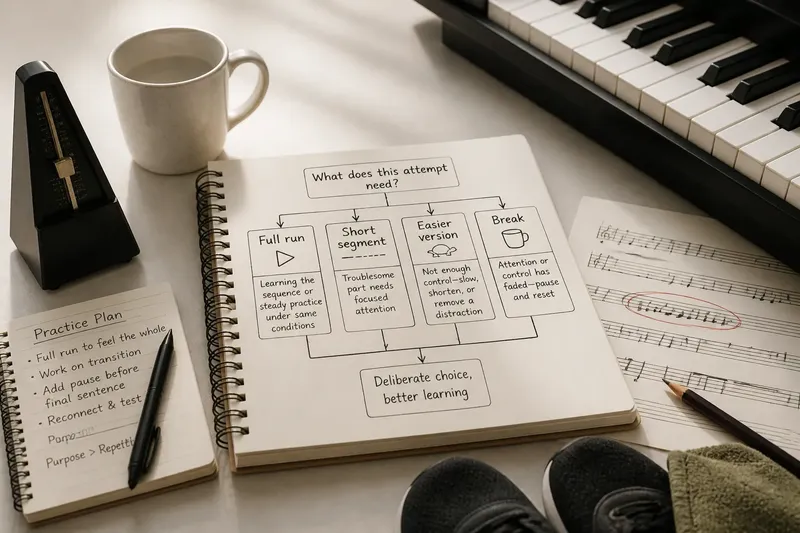
Use breaks deliberately. Step away from the material, stretch, get water, or look at something unrelated for a moment. When you return, make a fresh attempt rather than automatically resuming mid-repetition. If your task requires continuous attention for safety, do not apply a break pattern that would make the activity unsafe.
Imagine you are practising a short speech at home. You have a printed page, a clear place to stand, and a sentence that keeps coming out unclear. You could work on that sentence in a compact block, take a brief pause, then speak the whole passage once to see whether the correction holds. The observable result is whether the sentence sounds clearer in context, not simply whether you spent longer repeating it.
Choose a first schedule and make it usable
Start with the smallest session that allows a meaningful attempt. If the task has a natural unit, set aside a short block for it. If getting started takes considerable effort or the task needs a continuous run, reserve a longer period and plan a change of activity or a pause within it.
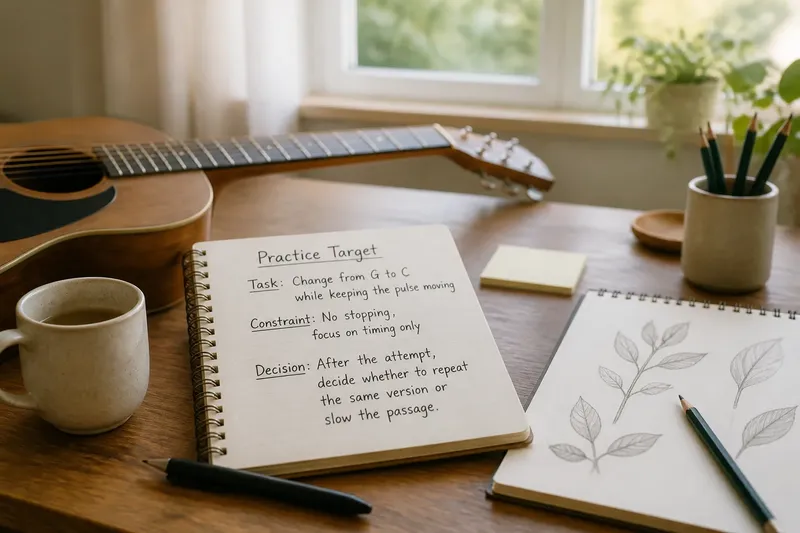
Keep the first plan simple enough to follow. Note the task, the session format, and what you will pay attention to. For example: “Practise the tricky transition in the song, listen for a clean change, then play the whole verse.” This gives a short block a purpose and gives a longer session a shape.
Do not fill the available time just because it is there. If the useful part of the session is over, stop, write down what to revisit, and leave the materials ready for next time. Equally, do not abandon a productive longer session just because a clock has reached an arbitrary boundary, provided you remain attentive and the activity is appropriate to continue.
A basic choice can be made this way:
- Choose a short block when the task has a small, repeatable unit and little setup.
- Choose one longer session when the work needs a continuous run or setup is substantial.
- Choose a mixed session when focused detail work needs to be checked in a complete performance or product.
- Pause or change tasks when attention is slipping and attempts are becoming automatic.
- Reconsider the format if starting repeatedly feels harder than continuing once you begin.
These are starting choices, not permanent rules. A schedule should fit the actual task and the energy you can bring to it.
Review the format after practising
After each session, make a brief note about the work, not a judgement about your talent. Record what you practised, what you noticed, and what you would do next time. Useful observations include “the rhythm became uneven after the transition” or “the second attempt was clearer after a pause.” Avoid notes such as “bad session” that do not help you make a decision.
Look for signs that the format is helping. A short block is serving its purpose if you can begin promptly and keep the target in mind. A longer session is useful if it gives you enough continuity to complete the relevant work while attention remains engaged. If neither description fits, adjust the session rather than blaming yourself.
If the same task repeatedly loses your attention in a long session, divide it into sections or alternate focused work with a complete run. If short sessions repeatedly end just as you get oriented, combine them into a longer appointment or make the setup easier. Change one part of the schedule at a time so you can tell what felt more workable.
How should I choose a session length?
Are short practice blocks better than long sessions?
Neither format is automatically better. Short blocks can make a small target easier to approach, while longer sessions can suit work that needs continuity; choose by task and attention.
When should I split a longer practice session?
Split it when you notice that attempts are becoming automatic, your focus is drifting, or the task has a natural boundary. A pause or change of activity can give you a fresh reason to attend to the next attempt.
What if setting up takes longer than the practice?
Keep related tasks together, prepare materials in advance, or use a longer session when the activity benefits from continuity. If a short session still fits the task, simplify the start rather than adding practice that serves no clear purpose.
Can I combine short and long practice in one day?
Yes, if the formats serve different parts of the work. You might focus on one small problem in a short block and later do a complete run, then note what you want to address next.
Let the next session answer one question
Before you finish, decide what the next session needs to show you: whether a difficult part is clearer, whether you can maintain attention through a complete run, or whether a simpler setup makes starting easier. Write that question beside your note, then choose a short block, a longer session, or a combination that can answer it.
When you are deciding between short practice blocks and one longer session, use the task and your observations to choose—not an ideal schedule borrowed from someone else. Keep the next attempt clear, and change the format when it stops serving the work.